

Doctor burnout begins younger than we think – by Dr Maxine Szramka
“Looking back, I now know that I was burnt out when I started medical school, let alone what happened within the first few months of medical school which only made it all worse.
I remember looking around at all of my classmates on day 1 of medical school, we all looked really tired – we had worked so very hard through HSC to get the needed marks to get into medical school and we were excited to learn what there was to learn, as well as exhausted from all that HSC had put us through.
 We thought we were about to have the great mysteries of the world revealed to us through the learning of all there was to learn about health, understandings of humanity, the human body, medicine and care.
There was a sense that we were going to be initiated into the mysteries of life, the universe and everything, with an invitation to an exclusive club with that knowing that we would share with the world.
We had worked hard, we had proven ourselves worthy – we had made it!! Or so we thought…..
We were to be sorely disappointed, and let down, as instead of being revealed the mysteries, wisdoms and understandings, we were to be placed on an empty impersonal treadmill of dry rote learning, chemistry, biochemistry, anatomy, biophysics, physiology 101, statistics …taught by the droning monotones of generally disinterested, disillusioned and burnt out and ‘dry’ lecturers.
It was made clear that we were at the mercy of ‘the system’ as lowly students who had to do as we were told, and had to do whatever it took to ‘get the marks’.
Doctors and teachers were above us, and we were most definitely on the bottom, with nothing to offer them, as we ‘knew nothing’ and thus were nothing.
We had lectures 8 hours a day, with homework and assignments to do for 3 hours after that. It was exhausting, and disempowering. We were on a treadmill with every second of the day measured and controlled by others, moving from lecture to lecture, assignment to assignment and then exam to exam.
We were never understood or appreciated as people, and no one sought to make sure we were taken care of, nor that we were taking care of ourselves, but rather it was made clear there was ‘the staff/lecturers’ and then ‘us’ who were apparently nothing because we knew nothing and were ‘young’ and we had the learning to do before we could belong.
We had to follow the schedule, and do as we were told with no room for choice or negotiation or personal expression. We had to ‘fit in’ ‘or else’, with the or else being the imminent threat of failure, and /or getting bad marks, which meant we would not get good jobs later on.
Thus, our whole lives depended on what we were doing and how much people approved of us at such a young age. Much of this was unspoken, but palpable and absorbed.
Within 3 months, we were well and truly exhausted, burnt out and disillusioned – at the tender age of only 17/18 – and questioning the very reason that we chose medicine in the first place as there was nothing of the ‘medicine-ing’ to show us whether we had made a true choice.
Medicine is about people. People are the ones who are ill and need assistance, and although we know that patients are people, something that seems to be missed in the discussion of all of this, as doctors are often incorrectly and inappropriately publicly portrayed as being ‘evil uncaring money grabbing thugs’, is that doctors and medical students are people too.
Yes, you read correctly!
You can’t have a profession that makes things about people as patients and treats those who treat people ie in this case doctors, as impersonal machines to be at the mercy of the system to do as they are told.
The people who do medicine are enormously caring, and are there to truly help people and they are deeply sensitive as part of that and this needs to be honoured and appreciated, and at present, it is not.
There’s a lot of talk in the media about burnout being because of all the hours that we work in medicine. Those things definitely contribute, but they’re only a part of the story.
Burnout actually starts when you lose yourself as a person and make your life about everything that you are told that you need to do and to be and this begins in medical school, if not earlier as people set themselves up to ‘be’ their career.
In medical school you very much do as you are told, as you will fail and/or be ostracized if you do not, and you are moulded to be with people in a role, the role of ‘the doctor’; you are not able to be ‘you’ or taught to be you with people.
The role has a certain ‘look’, ‘tone’, ‘speech’ and way of interacting with people. Its exhausting ‘putting on an act’ whether it be professional or otherwise. You’re constantly trying to measure and recall the correct response that somebody else has told you is the ‘right’ one.
Once you have lost yourself and your identity in a role, you are at the mercy of everything the system throws at you, and when you are deep in a role, you just accept certain behaviours and conditions as ‘normal’ as part of the role, and, there is no care for yourself in the ‘role’ as doctor, where the role itself is about self negation, and self neglect as part of being seen to be a ‘good doctor’. This lack of self care leads to further bodily harm and burnout is part of that.
Some studies report that 85% of medical students are burnt out. From my personal experience, we were all burnt out, and this makes me wonder if perhaps some people lack insight to self report these things on questionnaires! Lack of insight in burnout is well recognized in men in particular.
Burnout gets even worse in junior doctor training, as you are completely aware and even further reinforced that you are at ‘the bottom of the food chain’ and that your only value is in doing as much work as possible, never knowing if it is good enough, always feeling that it is not good enough, and existing in a culture of bullying, absent support and frank abuse. It means living in constant anxiety, stress and distress, but buried as you have to be seen to be in control, and all of this leads to exhaustion, self harming behaviours, self neglect, and ever deepening burn out.
In the hospital system, despite it being a system that supposedly ‘cares’ about ‘people’, there is actually no real true care for staff, whether they be doctors or nurses. People are simply expected to ‘do their job’ and not inconvenience anyone else.
It is a factory chain, and there exists an impersonal hierarchical system, where people are only known and are thought to be as good and as useful as they do their role in the way that it pleases everyone. This tension generates ongoing stress, and this applies across the roles of nurse to doctor, to administrator, to specialist etc.
In many hospitals I have worked in there is frank hostility between nurses and doctors. The nurses frequently are resentful of junior doctors, especially the more senior nurses who have more experience, and they frequently in my personal experience bully those junior doctors and intimidate them into feeling like they are nothing, despite having done 6 years of intensive training.
The junior doctors are frequently intimidated and cowed by their registrars and senior doctors as well, and are effectively the meat in a bully sandwich where nobody truly respects them or values them. Administration also treats them as pawns who they resent paying, and nurses resent them for earning more than them and having more respect in a system than them, the senior doctors can be annoyed at their inexperience and the fact they need to supervise them, and quite possibly annoyed by their at times unique personalities and resent the fact they did not get to choose their own team.
It doesn’t get more disempowering or disrespecting of people than that. In the corporate world, people are carefully selected to work together to form the best team irrespective of training in complete understanding that who people are is important in teams working together.
In medicine, irrespective of personalities involved, you go where you are sent and you have to make do to survive regardless of who you get paired up with. That is reflective of the lack of care and respect that there is for people as people in the system ¬– in medicine, you are not a person, you are your studies and qualifications and your medical experience; the rest of you is there to be ignored, and to be put up with if it is ‘problematic’. All of these are ongoing tensions that lead to chronic anxiousness and burnout.
In medicine your worth is in your knowledge and your ability to do your job well, and fast. It has nothing to do with who you are as a person, although its great if you are a pleaser and know how to say what people want to hear.
As a junior doctor, you know the least of anyone in the system as you are still learning, thus you know you are the bottom of the food chain as you do not offer true value according to the workings of the system, yet, and you live in constant anxiety of being exposed for ‘not knowing’ as when you do not know, you are bullied and shamed, rather than being supported and encouraged to learn. It is ‘your fault’ and you are ostracized, shamed and put up for public discussion and criticism if something goes wrong. There is no true support, only blame in the medical system. This system crushes people, it makes them shut down who they are. It is not natural to go through life without support from other people and thus the medical system is truly inhumane in the way it treats its medical staff.
 People talk about the work conditions, the hours and the intensity that people work in health care under as causing burnout, and all of these things do have a part to play. But, the biggest root cause for burnout is loss of self through the training, and with that, loss of self worth which then needs to be puffed up by recognition for ‘knowing stuff’ and ‘doing a good job’. Lack of self and self worth leads to enormous vulnerability to bullying and abuse, which further corrodes self worth, and leads to lack of self care, which is vital in keeping the body well and healthy to be able to emotionally and physically handle the demands of the day.
The shameful thing here is that Medicine is about people, and its greatest commodity, people, are not being looked after, and, they are not being trained to look after themselves. Doctors and medical students are devalued as people and disempowered. Contrary to popular opinion, doctors are disempowered, not empowered. They are the most disempowered people I know, totally beholden and vulnerable to ‘the system’ to give them everything in life, and thus at the mercy of the cruel behaviours and lack of respect, bullying and abuse that the system throws their way, unable to take a true stand against that which is not true and is crushing, for fear of losing out and losing everything.
Doctors ‘put up’ as they need to get training jobs and then good specialty consultant positions, and reputation is everything in this regard. Thus, they are beholden to all that the system throws at them, for if they buckle and complain they run the risk of being abandoned by the system, being left with no job, and no prospects after 4-6 years of medical school and up to 10 years post graduate training with all of the huge educational costs incurred. Thus if the culture is self neglect at the expense of others and the work, as it is, most take it on to be seen to be doing the right and good thing as a doctor. Those who are too confident, are taken down by their peers; those who look too well and relaxed and healthy, may not be perceived to be doing a good job as well as being the target of immense jealousy.
I was once taken aside by a supervising physician who told me how excellent I was and what an incredible job I did, and that I was extraordinarily effective and efficient, but, that he recommended I rush around more and seem more stressed, otherwise other doctors would think I was doing no work and didn’t know what was going on. He suggested to me that in the first few weeks of a new job that I rush around, and look stressed, before reverting to my open and relaxed way of being in order to be taken seriously. Sad advice, and very disheartening for a confident and competent – and healthy! – registrar, being told to make herself ill in order to gain approval from superiors, and a poor reflection on our medical system and peers who genuinely perceive things in this way. This culture encourages people to seem and to actually be stressed for reward as being recognized as doing a good job, although what is ‘good’ about doing things ‘stressed out’ is not entirely clear to me…
Through the system, most doctors have lost who they truly are. The system encourages stress and being stressed and tired as ‘normal’ and reacts when people are not stressed, with colleagues heaping pressure on colleagues to make them equally stressed and intense as them. Doctors share stress stories, where they seem to be the hero for ‘carrying on’.
The problem in medicine is that working when tired, stressed and burnt out is worn as a badge of honour, and not the patient and peer burden and risk for harm that it truly is. It is the end result of a system that does not value who people are, and encourages and trains them to lose who they are with an appropriate professional face, put up and shut up, and work yourself to the bone.
Self care is not encouraged, and worth of self is not fostered anywhere independent of knowing things or being seen to do a good job. Worth is always dependent on results, which leaves doctors in a perpetual state of anxiety, over and above the usual human concern for well-being for their patients who they care for.
To address burnout, we need to address bullying, the dominating and disrespectful hierarchical structure, but more than that, we need to start appreciating and valuing the people who are doctors, and to empower them to care for themselves, to take care of themselves, and to know they offer value as who they are in their innate personal qualities, and not just what ‘they know’; to know that they don’t have to be stressed to offer value or be recognized within the system. When we introduce true care and the valuing of people into the health care system, starting with medical school and medical students we will start to eradicate burn out through true empowerment and in the process, provide extra-ordinary patient care in our health care system, through truly caring doctors who walk the talk and do not lip synch it.”
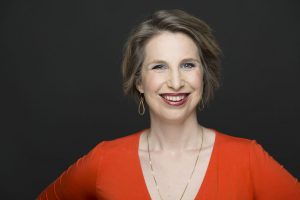 Dr Maxine Szramka (MBBS Hons 1, B Med Sc, FRACP) is a Consultant Rheumatologist in Sydney managing a busy private practice that specialises in the treatment of Arthritis and Musculoskeletal Pain. Dr Szramka also runs a research council, is the chair of the National Committee for Quality and Safety for the Australian Rheumatology Association, and is Clinical Senior Lecturer for the University of Wollongong. Maxine offers a service that instills a deep level of care and integrity that can be felt, enjoyed and is appreciated by every patient, from living this same depth of quality in her own life. Committed to the medical profession itself, passionate about the intricacies and workings of the body on both the physical as well as energetic level, science, and an advocate for free speech in true expression, Dr Szramka is dedicated to bringing the truth behind illness and disease from the way a life is being lived. A sought after medical educator and presenter Dr Szramka has a natural ability to bring humour and simplicity to any situation, and offers a deeper understanding or applied practical wisdom to life itself that is in honour of the whole body. She has a special interest in and presents internationally on doctor/medical practitioner burnout, vitality, well-being.
More articles on My Health Career:
- At Their Mercy – the 4 Corners report about sexual harassment and bullying in surgical training
- Medical students go rural to get a professional edge
- How to avoid burnout – for doctors and medical students
20 replies to “Doctor burnout begins younger than we think – by Dr Maxine Szramka”
Dr Szramka absolutely nails it. What she presents should be read, heeded and taught at all medical schools.
Maxine having worked in health for over 20 years, I never really knew about this level abuse for doctors. How important that we begin to listen and then understand what is going on for everyone that works in health. What has been coming up for me recently at work, with my colleagues is how as you have said medicine (nursing, allied health etc) is about people and that not only includes patient’s and families but also the people that work within the system. We are also equally important and need to be highly valued. I have always been bamboozled how staff are viewed as an expense, rather than an investment. Not only in that hospital or practice, but the community.
What an awesome insight into the realities of the medical system and how people are trained. Sadly…so ironic that our doctors are not taught the fundamentals of self-care which you would think would be such a basic element to their training.Thank you for sharing your insights so openly Dr Szramka.
i lived with friends who were medical students and then first year out junior doctors and their stress levels were enormous – being the only doctor at the scene of late night motor vehicle accidents in the back country where the hospital and another medical professional is a couple of hours away was deeply traumatizing for some of them. And often this was on a couple of hours sleep over two days as they had been on call. Not surprising they lived on plungers of coffee, lollies and chips – and they looked and felt terrible… but they didn’t know any better, and no one in their medical training had offered any wisdom about looking after themselves, only as Maxine has described above, they are put through a relentless treadmill and run into the ground. Great to see doctors are speaking up now. Let’s bring compassion and support back into this equation for all medical workers – and the benefits will be for the patients too in the end.
It is incredible but clearly true, that a system designed to care for patients should have zero care for the staff that support that system. It makes no sense. This lack of care for staff and the lack of self care in doctors severely limits the level of care that the system can deliver to patients. I can understand no one being willing to speak out about this for fear of losing the career they have worked so hard for, but if no one speaks out it is condemning future generations of doctors to more of the same. Hats off to Dr Szramka for exposing this.
“Burnout actually starts when you lose yourself as a person and make your life about everything that you are told that you need to do and to be”, just one of the many gems presented in this article which offers great insight to the current state of our medical system and a true way forward to support in decreasing stress, anxiety and burnout.
Wow Maxine, you really nailed it.
What a brilliant article.
This should be read and discussed as the FIRST lecture at the very START of Medical school. And become the framework for learning going forward.
I come from a Dentistry background and my experience was very similar to what you describe about medical students, I wish this had been my first lecture.
I like your suggestion, Kevin………..get this article listed as required reading, followed by discussion, for first year medical students. Then review it as they start their second year of training. Perhaps a self assessment of how they are doing on a self-care scale of 1 to 10 for the remaining years in medical school.
That is so true Kevin, Gayle. I have just started my first year of medical training this year and was astounded at the approach – right from Day 1. It was very unfortunate to have sponsors there before the official proceeding began, offering students free bags, drink-bottles, etc etc just to sign up with them. Funnily enough, these sponsors by and large were medical indemnity insurance companies, which is so very ironic.
But to the matter at hand, I would love to introduce this to my colleagues. I find it very interesting that much of ethical conduct is brushed over, yet forms the fundamental basis of how it is we will be not only with each other, but our patients and all else otherwise. I am interesting in developing much to offer colleagues in medical school – from assessing their current state of overwhelm, to learning to connect with how they are feeling through the process of each day – be it as we learn the sciences and examination techniques, or beyond into the clinical years of hospital rotations and eventual practice.
I recently saw a 4 Corners episode about medical training and young doctors. I was shocked by the situation related which is confirmed by Dr Szamka. It is a sad fact that many medical professionals are living in a state of burnout as a follow on effect of this situation. Hopefully this situation can be turned around and our health care professionals can become living examples of what is is to live a healthy lifestyle.
Wow! What a great reveal, and something I have observed many times as a nurse.
Dr Maxine Szramka has reminded us that its ultimately all about people, and I believe this line is fundamental : “Burnout actually starts when you lose yourself as a person and make your life about everything that you are told that you need to do and to be”. Doctors are amazing people and this is a great reminder to stop and value what they bring to us, and appreciate them for who they are, not just for what they ‘do’. Thanks so much.
This article by Dr Maxine Szramka is so true about the cause and effects of the systems we have in place to train the medical profession so they work hard and learn, but despite their best intentions, have not learnt the basic premise, that it’s all about people. It will be great when there’s a module at the beginning of all medical training to learn that to care for another, we all can start with caring for ourselves first.
Here here Gill.
This article was an eye opener to read as I hadn’t fully appreciated what going through the medical system would be like, even though, from everything I had heard about the medical system and training eluded to this burnout and bullying culture.
I think it is he bullying that I hadn’t fully grasped and I can not imagine what it is like to have that amount of sustained pressure for all of those years and beyond.
I encourage anyone who is placed to start deconstructing this system and replace it with humanity – to please do so.
Some of what Dr Szramka reveals in this article did not surprise me. After all, burnout seems a natural result of so many years of hard study. However, other aspects of this article greatly shocked me. I had no idea there was bullying amongst medical colleagues. A very insightful article about human behaviour which left me feeling sad………sad for those in the medical profession and sad for those of us who rely on them. Clearly we need a change of practice. Reading this article is only the start. Self care needs to become a required course for all entering medical school.
What an awesome article you have written here. It exposes what is truly going on in the medical profession. Self care definitely needs to become implemented into all medical schools.
Maxine, I love how you articulate from your experience what it is that I and so many other young student doctors are facing. Almost all of the conversations I have with my colleagues and the teaching staff centres around how we integrate the “fire hose at full blast” of information that we are presented, every single day. How we look after ourselves whilst we do this. What we are eating. How we are sleeping. Whether we are exercising.
It is awful to see that even after the first six months, there have been casualties. Not to present to an Emergency Department, but those for whom the anxiety of trying to cover such a vast range of information to reproduce in exams has been too much. It is unbelievable that we are taught less about the skills of being confident in ourselves, being with others, and even in some of the techniques we learn, and more about the scientific knowledge that later will inform our practice. Of course this is undeniably important but equally so to learn how to truly support oneself through such an arduous, demanding career path. Our current focus – each medical student I meet – is not people, but exams. Ultimately we don’t practice medical exams. They may be the necessary hoops to jump through, but we eventually will be practicing medicine ‘on’ people. It is people who will come to us with their health complaints and ask us to offer them all that we know and more in order to help them. If medical students are not taught now to be with people, to be naturally confident, open, compassionate and truly, deeply caring, then the culture you have describe above has little chance of changing.
Wow Maxine that is intense to read let alone what it would be like to live like this! Crazy that a profession that could be about health and healing is about stress and hostility on so many levels. It is great that you have shared so openly what it is like for doctors and call for a change as this really cannot continue – soon the doctors will be so sick that no-one will be able to do the job of healing – I jest – but surely we need to look seriously at how we are training and accepting a level of abuse as normal in a profession that at it’s foundation needs to be about caring for people.
Corruption runs deep, beginning already in school where achievement counts more than being who we are before learning and doing whatever we do. And so it continues into work life. That even the health professions whose utter point is to support and heal people are engulfed by the highest levels of disregard and self-sacrifice due to a dehumanized system is just the peak of absurdity and tells much if not everything about how much we corrupt ourselves, that is our true, healthy and harmonious nature and continue to do so from generation to generation. The medical system is not just close to collapse because of the heaps of patients due to rising states of illness and disease but also because it is rotten from the inside – the blind leading the blind, the sick healing the sick? Time to appreciate everyone equally in their innate humanness and humaneness, to foster a generation of doctors and allied health professionals that gives testimony of living a healthy and fulfilled life is possible, to be role models that give inspiration to patients of how to lovingly taking care of themselves and who can offer a level of healing far beyond subscribing pills, giving injections and perform surgery – healing to body and being.
Absolutely nailed it Maxine. Our Health System needs to change from the inside out, caring for the people who are to do the caring. It is very inspiring to meet a person in the medical system who is vibrantly healthy – I am much more likely to take on board lifestyle advice from someone in great health. It comes back to the precept on which medicine is based ‘Healer, heal thyself’. Your first hand insight into the experience of a doctor moving through the training ranks is nothing short of horrifying.