
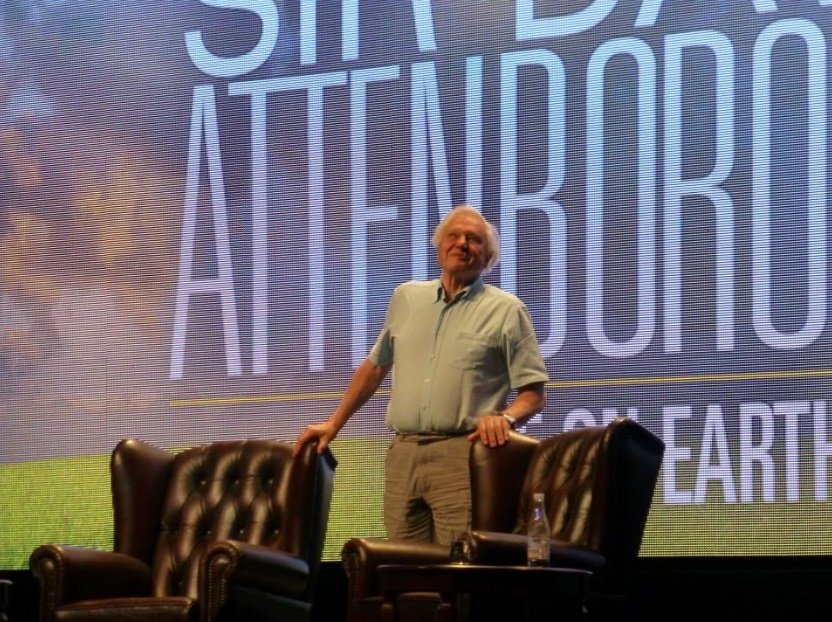
A lesson in changing with the times from Sir David Attenborough
Recently, I was fortunate enough to have the opportunity to see Sir David Attenborough live when he toured Australia. You can read a summary of his (rather impressive) biography here.
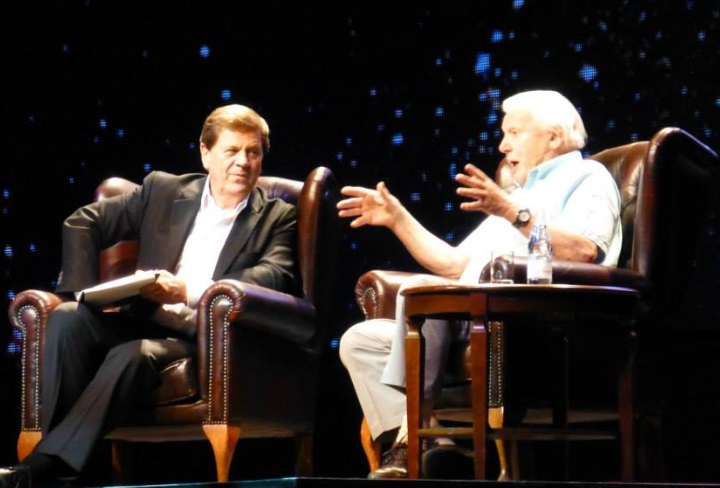 As I listened to Sir Attenborough talk about some of the highlights of his life, it struck me that he is a fantastic example of someone who has changed with the times. When he started his career in broadcasting in the 1950s, radio was ‘the big thing’. In 1952, he recalls receiving a letter from the BBC saying that they were starting a new project, called television, and that he should meet with the BBC’s television producers and see if there might be something in it for him. At the time, a young David Attenborough hadn’t personally seen a television.
Sir Attenborough told stories about the broadcasting of the first nature shows on the BBC. As the television network was small, and there was a small budget, nature shows were generally of a zoo keeper bringing animals into the studio and talking about them. These early nature shows were broadcast live, as film cost money, so it was not used in the early days at the BBC. A young David Attenborough thought that it made sense to film animals where they live. After all, one of his sayings is that “a polar bear isn’t a polar bear unless it is on ice.”
 David Attenborough went to Africa with staff from the London zoo in the 1950’s. He also went on a quest to capture the world’s first footage of the Komodo Dragon, and also of the Bird of Paradise. Being the 1950s of course, this was all in black and white film.
From 1965 to 1968, David Attenborough had the position of Controller of BBC2, and during this time he introduced colour television in Britain. He was also the Director of Programmes for the BBC from 1969 to 1972. He mentioned that in his contract, he had a clause saying that every 18 months he would be able to go into the field and film nature with the latest equipment.
One of the points Sir Attenborough made was that he wouldn’t be able to do what he does without the help of scientists. He recalled a time when he came across a scientist from San Francisco who was able to put a radio tag onto a whale. He also had a friend who had a small plane. Because of the radio tag, they were able to follow where and when a whale would come to the surface for air and capture footage of the spectacle.
Obviously if you fast forward to 2013, the most recent footage taken by Sir Attenborough’s film crew is nothing short of spectacular. When you think about it in relation to the early footage from the 1950’s, you can see that Sir David Attenborough has definitely been one to change with the times.
Right at the beginning of Sir Attenborough’s live show in Brisbane, he was greeted with a standing ovation. Before a word was spoken. It occurred to me that this would not have been the case had he not taken a chance on the new technology called television in the 1950s, and been at the forefront of its evolution over the years.
Taking chances and being at the forefront. Concepts that you might want to think about for your own career and pursuits in life.
Amanda :-)
Founder – My Health Career
2 replies to “A lesson in changing with the times from Sir David Attenborough”
Your method of telling everything in this piece of writing is actually fastidious, all be able to without difficulty know it, Thanks
a lot.
Discover a informative website designed to make useful content easy to find.
Browse practical articles, interesting topics, and reliable information without unnecessary complexity.
Follow clear categories to reach content that matches your interests.
The site offers a positive experience for readers looking for
useful ideas, relevant updates, practical guidance, and quality online information across a wide
range of subjects whenever they choose to browse online.