
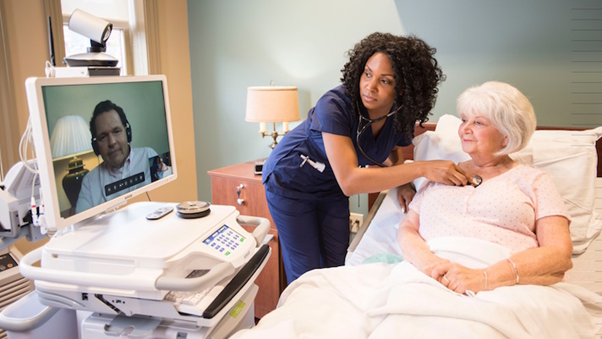
Telehealth: The Pros and Cons
In December 2021 the Australian Government announced that it would be investing $106 million over 4 years to support telehealth services for GPs, specialists and consultant physicians, allied health professionals, mental health professionals and nurse practitioners. While telehealth can improve patient outcomes, it is important to look at both the pros and cons of this technology.
Pros of telehealth
Reduction in Acute Care Presentation
Remote Patient Monitoring has been shown to reduce acute care use for patients with cardiovascular disease and COPD. This is because it can facilitate proactive management via detection of exacerbations of these chronic conditions.
More accessible and convenient health care
While those who are housebound and live a significant distance from a health professional may seem to be the more obvious patient group who would benefit from telehealth, those who are unable to leave their jobs also benefit from virtual care. Access can be through video conferencing, smartphone applications, and online management systems.
With the December 2021 government announcement, Dietitians Association of Australia CEO Robert Hunt said “We commend the Government on this decision as telehealth has helped break through some of the barriers faced by Australians when seeking dietetic health care. Over 35% of our population are living with a nutrition related chronic disease. Providing Australians with the option of accessing their dietitian either virtually or in-person will make it easier for everyone to put their health first.”
Reduced chance of infection
In this day and age of a worldwide pandemic, telehealth has played an important role in reducing the opportunity for the virus to spread. This is due to those with the infection not attending in-person appointments in where they could otherwise have exposed practitioners and other patients to the virus.
Time-saving
Telehealth eliminates a patient’s time in travelling to and from their appointments.
Cons of Telehealth
Some visits should be face-to-face
Of course, there are some visits to a health practitioner that must be face-to-face. The need for a physical examination, procedure or in-room treatment are examples of consultations that can’t take place via telehealth. However, at a recent conference Queensland Health presented on its vision for seamless integration between virtual and in-person health care.
Big high five for @DamianJGreen and his vision and leadership for a statewide virtual healthcare strategy. A love the vision for a seamless integration between virtual and in-person care. This is how healthcare should be! 👏 #DHIS2022 #telehealth #patientfirst pic.twitter.com/eXLiIF5Qhw
— Dr Louise Schaper #FullyVaxxed (@louise_schaper) February 21, 2022
Technical difficulties
The technical aspects of telehealth need to be considered to allow patients to participate. Below is a tweet from Australian surgeon Dr Elizabeth Sigston.
Absolutely. I’ve only done telehealth via phone first my regional patients. Most unfamiliar with video calling &/or internet not good enough.
— A/Prof. Elizabeth Sigston FRACS PHD (@DrESigston) January 12, 2022
Occupational Therapy Australia has produced telehealth guidelines which includes information about technical and audiovisual tips.
Funding
In January 2022 the Royal Australian College of General Practitioners (RACGP) welcomed the federal Government’s move to restore telehealth to peak COVID-19 pandemic levels, when an additional $24 million was announced for a range of measures for GPs and other specialists.
However, RACGP President Dr Karen Price said more needed to be done.
“It’s positive news that the Government is listening to the Royal Australian College of GPs on telehealth and need for more support to manage the increasing number of COVID-19 positive patients in the community,” she said.
“GPs and patients have embraced telehealth during the pandemic, and it is here to stay. Video and telephone consultations have changed the way we deliver healthcare and I believe many patients will continue to utilise telehealth for years to come post-pandemic as a compliment to face-to-face care.
“We have strongly advocated for Medicare rebates to remain for longer telephone consultations and for good reason. Telehealth use in Australia is largely phone-based. Between March 2020 and March 2021, video consultations comprised only 2.4% of telehealth services. Video consultations are not suitable for many patients including older people unaccustomed to the technology or those with unreliable internet access.
“Last year, when the federal Government removed Medicare support for phone consultations lasting longer than 20 minutes, we warned that this would disadvantage vulnerable patient groups.
“The stark reality is that many of the patients who benefit the most from telehealth are also the most disadvantaged when it comes to internet connectivity and reliability.
“Discouraging longer phone consultations is particularly disadvantageous for Aboriginal and Torres Strait Islander people seeking to undertake a health assessment, patients in rural and remote areas, older people, and those with multiple chronic conditions.
“So, we called on the Government to reinstate Medicare rebates for longer phone consultations as part of the permanent telehealth model.
“A six-month restoration of these rebates is welcome; however, we must not stop there – this must be a permanent fixture of telehealth for years to come and the RACGP will continue fighting to make that happen.
“Otherwise, we risk undoing a lot of hard work that has improved care for patients including those in rural and remote areas, Aboriginal and Torres Strait Islander patients and patients with chronic disease.”
Trust and confidence
A study is underway to investigate consumer confidence in digital health, as while digital health technologies and models of care have been earmarked as part of the method of preventing cardiovascular disease, there is evidence that 9 out of 10 Australians do not trust these technologies.